
Skip to content
LearnDash Support
  • Products

      LearnDash LMS Plugin

      Powering intuitive online courses with advanced management and engagement features for WordPress.

      Learn More

      LearnDash LMS Plugin + Hosting

      StellarSites Learning is a fully managed hosting solution for WordPress.

      Learn More

      Premium LMS Add-ons
      Enhance your courses with extra features. Gather insights, reward learners, protect your course content, and more!

      Explore all Add-ons

      MemberDash
      The most flexible membership plugin for WordPress. Monetize your content and build a community.

      View MemberDash

  • Pricing
  • Add-ons & Integrations

      LEARNDASH ADD-ONS

      Instructor Role

      Empower Instructor to manage courses.

      Groups Management

      Organization management, delegation and more

      ProPanel

      Advanced analytics reporting.

      Gradebook

      Track progress and create report cards.

      Notes

      Enable notetaking and two-way communication.

      Rating, Reviews, & Feedback

      Build trust and gain valuable insights.

      FEATURED INTEGRATIONS

      The Events Calendar

      Connect with the most popular events solution.

      BuddyBoss

      Powerful tools for an enhance learning experience.

      WooCommerce

      The most popular shopping cart on WordPress.

      WeGlot

      Translate your LearnDash content.

      All Integrations

      BUNDLES

      Package and save
      Save when you buy multiple plugins in a bundle.

      See all bundles.

      MORE

      Release Notes

      Get Help

  • Resources
      LearnDash Academy Videos, webinars, and resources to help you launch a successful course.
      Blog Blog
articles with the latest news and tips to help you run high-quality courses.
      Knowledge Base A support network to help you make the most of your courses.
      Release Notes Stay up-to-date with the latest updates to LearnDash.
      Get Help

      Professional Services

      LMS Site Development Get hands-on assistance launching your course website.
      Website Maintenance WordPress management made easy.
      SEO Services SEO solutions that accelerate growth.

      Other Resources

      LearnDash Accessibility At LearnDash, we believe online learning should be accessible to everyone.
      Join the Dev Club
  • Demo
  • Sign In
Get LearnDash

Knowledge Bases: Support Home | LearnDash Core | LearnDash Add-ons | LearnDash Cloud | Resources | Mobile App

LearnDash Support
  • ← Return to LearnDash
  • Support
    • Support Home
    • All Knowledge Bases
    • LearnDash Core
    • Add-ons
    • Resources
    • Cloud
  • My Account
Popular searches: api duplicate couse email gp query loop [ld_course_resume]

Going Live

3
  • How to Update Your Android Learndash App
  • How to Publish Your Android LearnDash App to the Google Play Store
  • Apple App Store Publishing Checklist – How to Prepare Your iOS Learndash App for Publishing on the Apple App Store

Managing Content for LearnDash App

1
  • How to Configure Your Tab Bar and More Screen

Done For You

1
  • How to Add LearnDash as a User to Your Google Developer Account
View Categories
  • Home
  • All Knowledge Bases
  • LearnDash App
  • How to Use Web Fallbacks

How to Use Web Fallbacks

Introduction #


Web Fallbacks let you display any WordPress page or custom post type inside your LearnDash App. These pages load responsively and automatically remove your site’s header and footer, offering a native-like experience.

This guide explains how to configure Web Fallbacks, when to use them, and how they compare to native App Pages.

What Are Web Fallbacks? #

Web Fallbacks allow your existing WordPress content such as WooCommerce shops or custom archives to be embedded within the app. The content is displayed with the app’s native header and navigation, while your website’s header and footer are hidden.

Benefits of Web Fallbacks #

  • Seamless Integration – Web content blends in with the app’s native UI.
  • Cost & Time Efficient – Use existing web content without needing custom React Native development.
  • Supports Page Builders – Continue designing with Gutenberg, Elementor, and other tools.

Limitations of Web Fallbacks #

  • Requires Internet – These pages load over WiFi or mobile data and are unavailable offline.
  • Dependent on Site Speed – May load slower than native App Pages.

Accessing Web Fallback Settings #

  1. In your WordPress Dashboard, go to LearnDash App > Menus.
  2. Choose either Tab Bar Menu or More Screen Menu.

Screenshot of Tab Bar menu
  1. Click Save Menu if you’ve made any previous changes.

Adding Web Fallback Pages #

  1. Under App Core or WordPress Pages, select a page (e.g., Shop or Movies) and click Add to Menu.
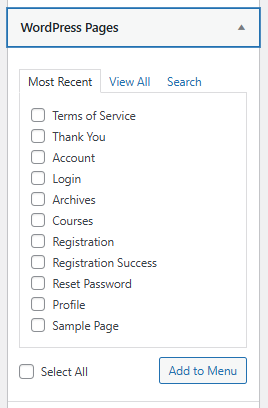
screenshot of WordPress pages
  1. Drag the new menu item into position.
  2. Click Save Menu.

Previewing Web Fallback Content #

  1. Open the LearnDash App on your device.
  2. Tap the new tab (e.g., Shop).
  3. Your website page loads without the site’s header/footer. Only the native app header is shown.
  4. Tap content like a product or article to view it.
  5. Use the app’s Back arrow to return.

Leveraging Deep Linking to Native Screens #

  1. Inside a fallback page, tap a link that leads to a native screen.
  2. The app detects the URL and opens the appropriate native screen.
  3. Tap Back to return to the web fallback view.

What Are App Pages? #

App Pages are fully native screens built using App Blocks. Unlike web fallbacks, they load instantly, work offline, and offer better performance.

Benefits of App Pages #

  • Native Experience – Smooth navigation with faster loading.
  • Offline Availability – Content is cached for offline access.
  • Better Performance – No external requests; served natively in-app.

Accessing App Pages #

  1. In your Dashboard, go to LearnDash App > App Pages.
  1. Create or edit App Pages using App Blocks (denoted with a phone icon).

Screenshot of App Pages Menu

Comparing Native Screens and Web Fallbacks #

FeatureWeb Fallbacks        Native App Pages
Setup ComplexityEasy – Use existing pagesAdvanced – Requires REST API + coding
PerformanceSlower, internet dependentFast and responsive
Offline AvailabilityNot supportedFully supported
Visual IntegrationMatches app layout, not perfectFully integrated
Page BuildersSupported (Elementor, Gutenberg)Not applicable

Troubleshooting and FAQs #

Q: Why aren’t my web fallback pages showing in the app?
A: Make sure you clicked Save Menu, then force-close and reopen the app.

Q: Why is the content loading slowly?
A: Performance depends on your website’s speed and server resources. Use caching and optimization plugins where possible.

Updated on April 22, 2026
Table of Contents
  • Introduction
  • What Are Web Fallbacks?
  • Benefits of Web Fallbacks
  • Limitations of Web Fallbacks
  • Accessing Web Fallback Settings
  • Adding Web Fallback Pages
  • Previewing Web Fallback Content
  • Leveraging Deep Linking to Native Screens
  • What Are App Pages?
  • Benefits of App Pages
  • Accessing App Pages
  • Comparing Native Screens and Web Fallbacks
  • Troubleshooting and FAQs

Was this Doc Useful?

Thanks for your feedback!

Products

  • LearnDash LMS Plugin
  • MemberDash Plugin
  • LearnDash Cloud
  • ProPanel
  • Groups Management
  • Gradebook
  • Notes
  • Integrations

Support

  • Contact Us
  • Experts
  • Documentation
  • Facebook Community

Company

  • About LearnDash
  • Brand Assets
  • Careers
  • Affiliates
  • Privacy Policy
  • Terms and Conditions
  • Refund Policy

Our Partners

  • The Events Calendar
  • MemberDash
  • Kadence
  • GiveWP
  • Iconic
  • SolidWP

Stay Connected Subscribe to our newsletter
  • YouTube
  • X
  • Facebook
  • Instagram

Copyright 2026. All Rights Reserved.

A Liquid Web Brand
WordPress Hosting Services
© 2026 All Rights Reserved

StellarWP
liquidweb